In the plains of Delhi, Chandigarh, or Mumbai, coffee is often a functional transaction. It is an urgent fuel gulped from a paper cup between metro interchanges or sipped absentmindedly through an afternoon Zoom presentation. But bring that very same drink up into the mountains—up winding ghats into the valley of the gods—and the entire experience fundamentally mutates.
Here at Gabbu’s, high above the roaring Beas river in Old Manali, coffee ceases to be a stimulant. It becomes a thermal anchor, an excuse to be quiet, and a bridge between cold stone and warm heart.
1. The Tactile Comfort of Heat
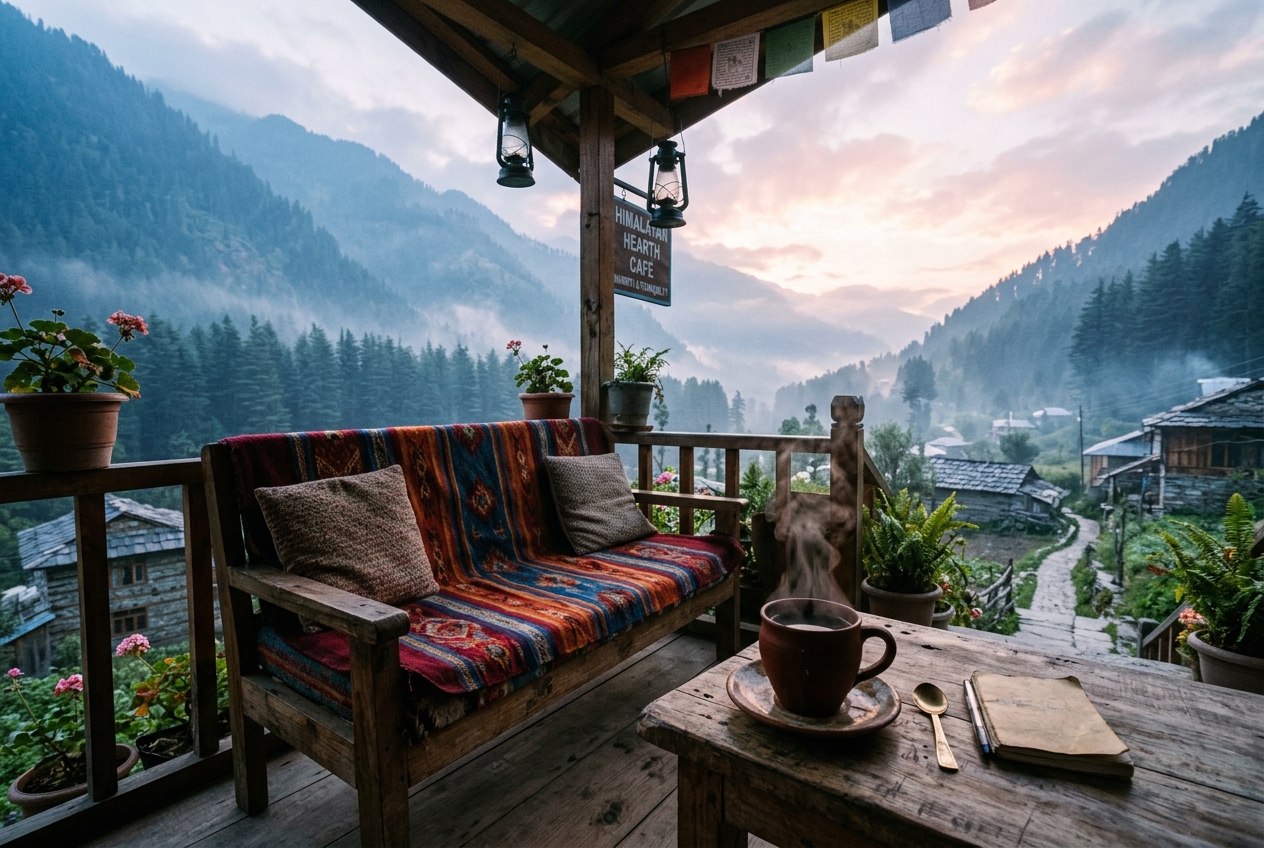
When dawn breaks across the Kullu valley in autumn and winter, the temperature frequently hovers between 2°C and 8°C. Your fingers are numb from the walk past ancient Himachali slate houses and apple orchards. Stepping through our heavy timber door, the first sensory reward is tactile: wrapping cold, stiff hands around a thick, heat-retaining ceramic mug.
Before you even taste the coffee, the heat radiates through your palms, relaxing your shoulders and slowing your breath. In sensory psychology, this thermal feedback triggers instantaneous comfort—a reminder that you are sheltered from the elements.
“In the city, coffee speeds you up. In the mountains, it asks you to sit still until the steam clears.” — Old Manali Resident & Cafe Regular
2. The Olfactory Canvas of Pine & Deodar
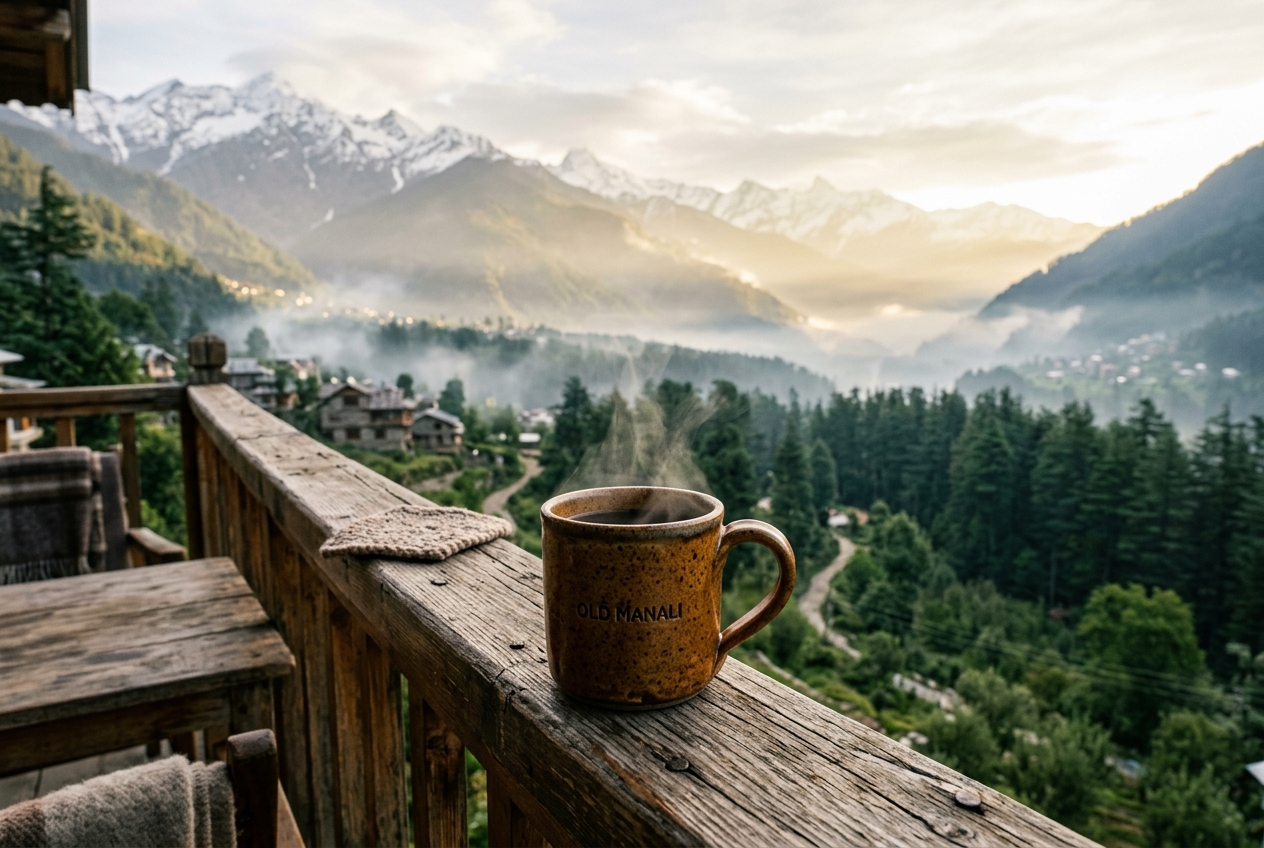
Human taste is 80% smell. In metropolitan areas, city air is saturated with vehicle exhaust, concrete dust, and urban humidity. In Manali, the air is clean, thin, and loaded with natural terpenes: damp earth, rain on slate, and the rich resin of centenary deodar cedars.
When freshly roasted coffee aromatics—caramelized sugars, wild berries, and toasted hazelnuts—mingle with alpine pine air, something extraordinary happens. The notes do not compete; they complement each other, creating an earthy sweetness you cannot recreate anywhere else in the world.
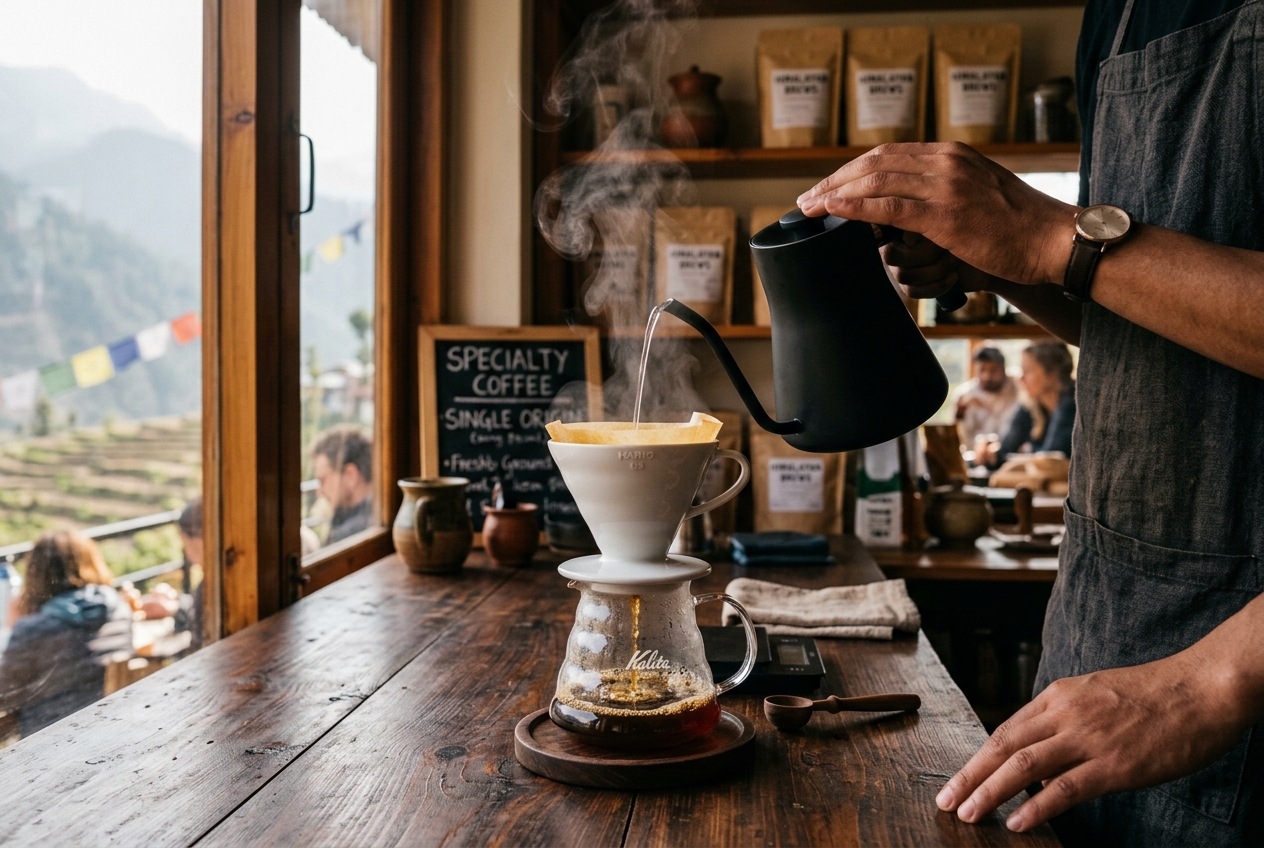
Because water boils at ~93°C at 2,050m elevation, we never risk scalding delicate Arabica grinds. The extracted brew is naturally smoother, with less astringent bitterness and higher preservation of delicate floral aromas.
3. The Architecture of Sanctuary
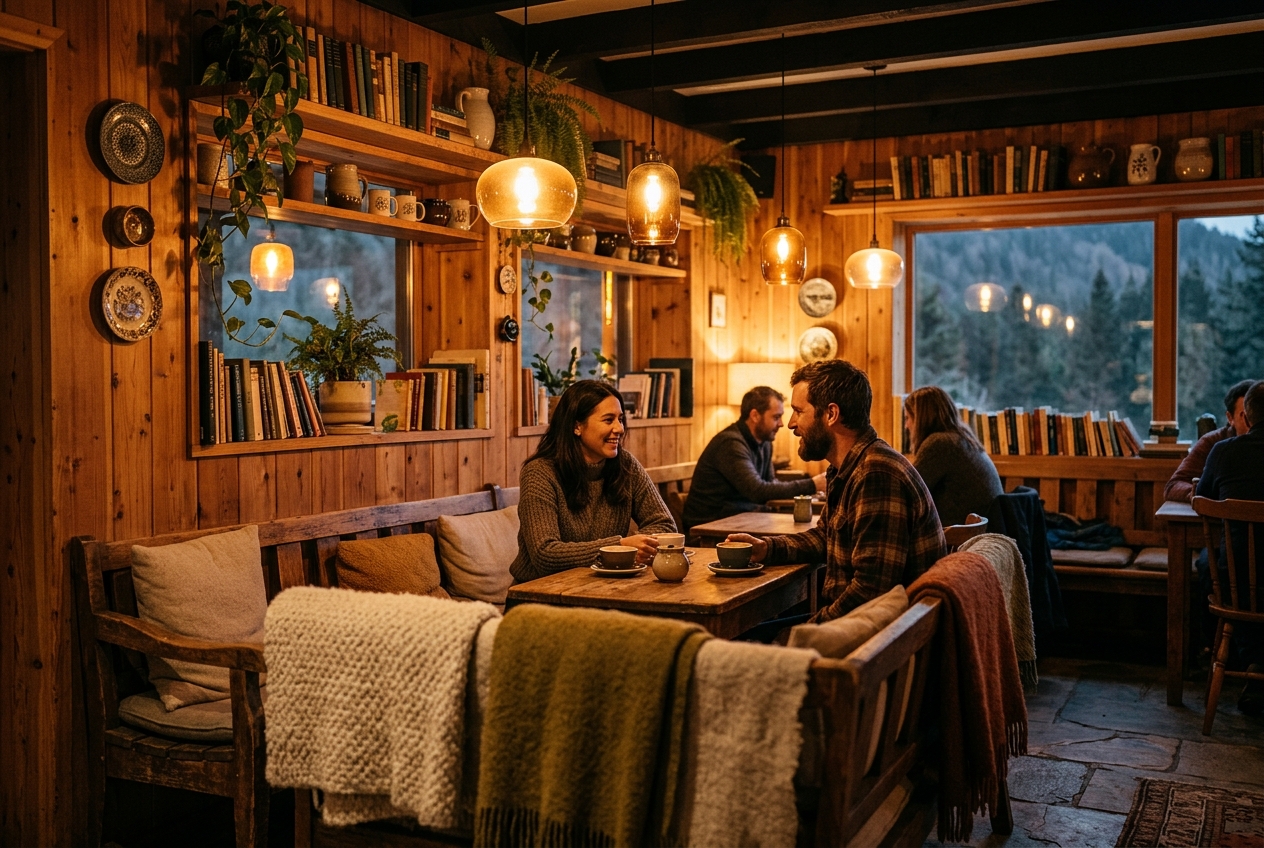
Coffee tastes better when you aren't rushing. Our space was built using local kath-kuni inspired timber framing, warm cedar planks, vintage amber filament pendants, and floor-to-ceiling glass that looks directly out onto the snow-streaked ridgelines.
Outside, the elements are wild and unyielding. Inside, the vinyl turntable spins Neil Young or quiet jazz, Gabbu sleeps peacefully near the corner rug, and your cup stays warm. It is that contrast—the wild mountain outside and the sanctuary inside—that makes coffee in Manali taste so indelible.
If you are visiting Manali, do yourself one kindness: do not set an early morning alarm. Wake when the mountain light hits your window, bundle up in a woollen shawl, walk up the cobbled path to Gabbu’s, and order a double pour-over. You’ll understand within the very first sip.