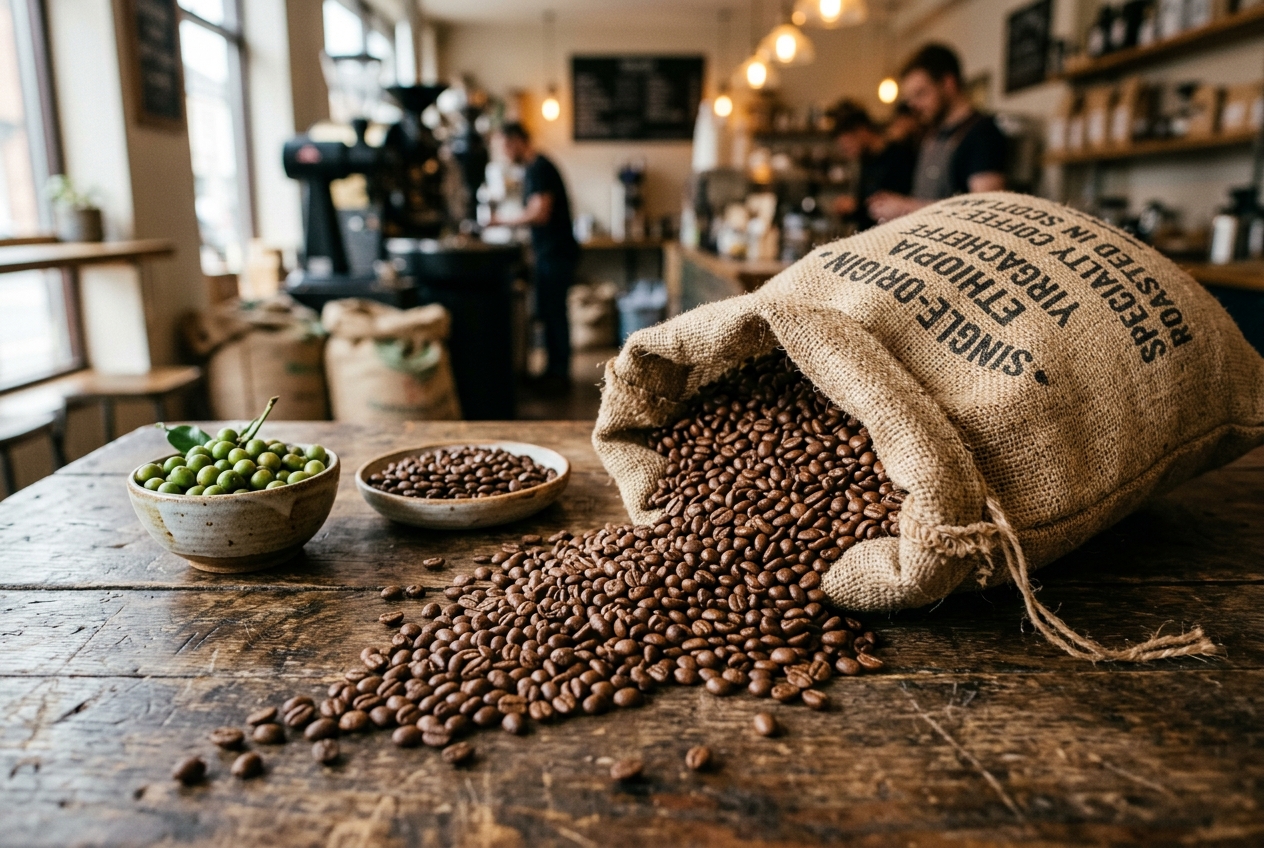
There is a common misconception that great coffee is born simply out of an expensive machine or an exotic origin stamp. While high-grade estate beans certainly lay the foundation, the truth is far more intimate: a great cup of coffee is an act of translation. It is the patience to listen to how a roasted seed responds to temperature, pressure, and Himalayan water.
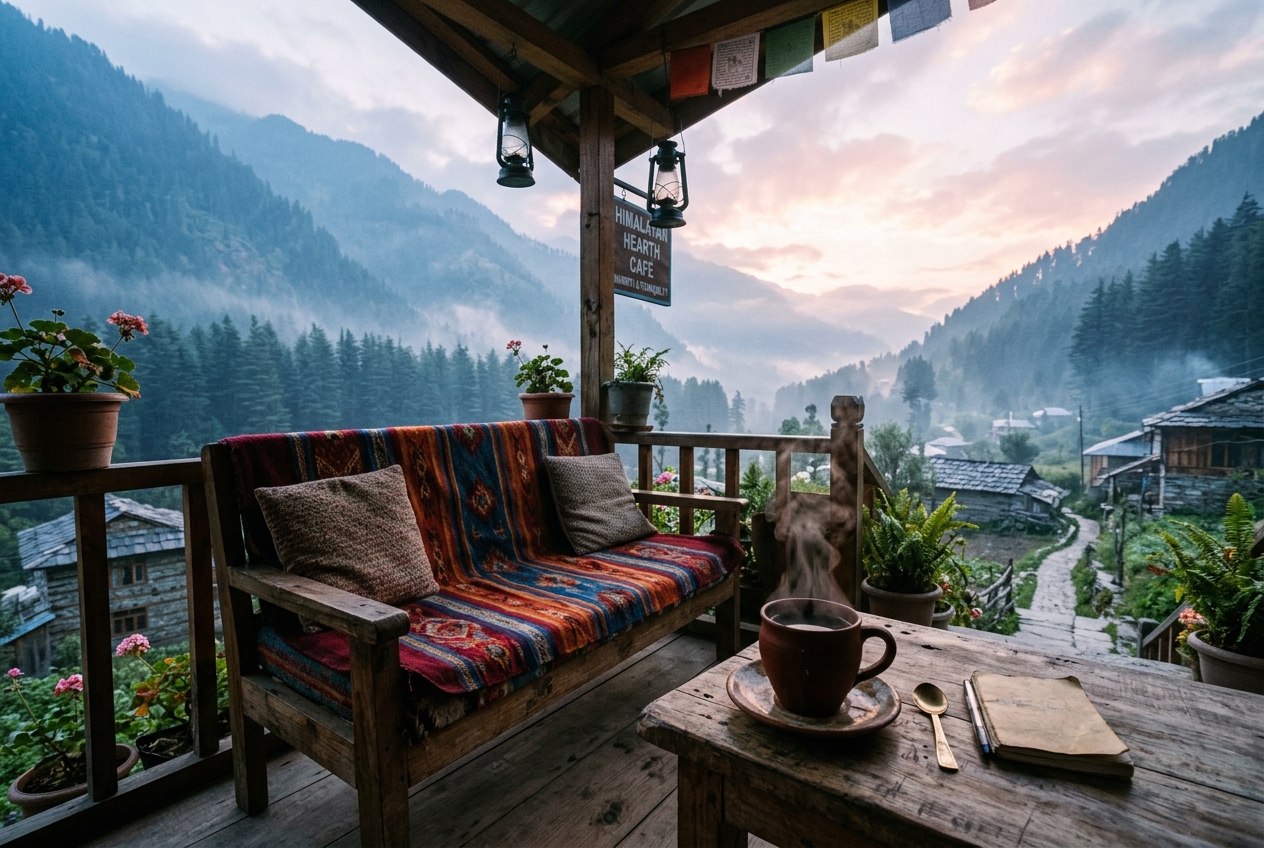
When you sit by our cedar windows in Old Manali watching the mist weave through the deodars, that steaming cup in your hands has undergone an exacting sequence of decisions. At 2,050 meters above sea level, atmospheric pressure drops, causing water to boil at approximately 93.2°C rather than the standard 100°C. For specialty coffee extraction, this high-altitude physics is not a handicap—it is a superpower.
1. Water: The Invisible Ninety-Eight Percent
Nearly 98.5% of your filter brew is water. If the water tastes lifeless or over-mineralized, the most exquisite Geisha or washed Bourbon bean will collapse into astringency or dull flatness. We draw naturally filtered snowmelt from the upper Manalsu catchment, conditioning it to strike a delicate total dissolved solids (TDS) target of 110–130 ppm with optimal calcium and magnesium balances.
“Coffee does not want to be forced. It asks only for water that respects its delicate oils and a barista who knows when to step out of the way.” — Head Barista, Gabbu’s Cafe
2. The Geometry of the Grind
Crushing a roasted bean is easy; fracturing it into uniform polyhedral particles is an art form. Inconsistent fines clog filter papers, producing bitter over-extraction, while boulder-sized fragments leave sweet floral sugars trapped inside. Our flat burr grinders are recalibrated twice daily—once at dawn when the chill mountain air contracts the burrs, and again after midday when the sun warms our timber bar.
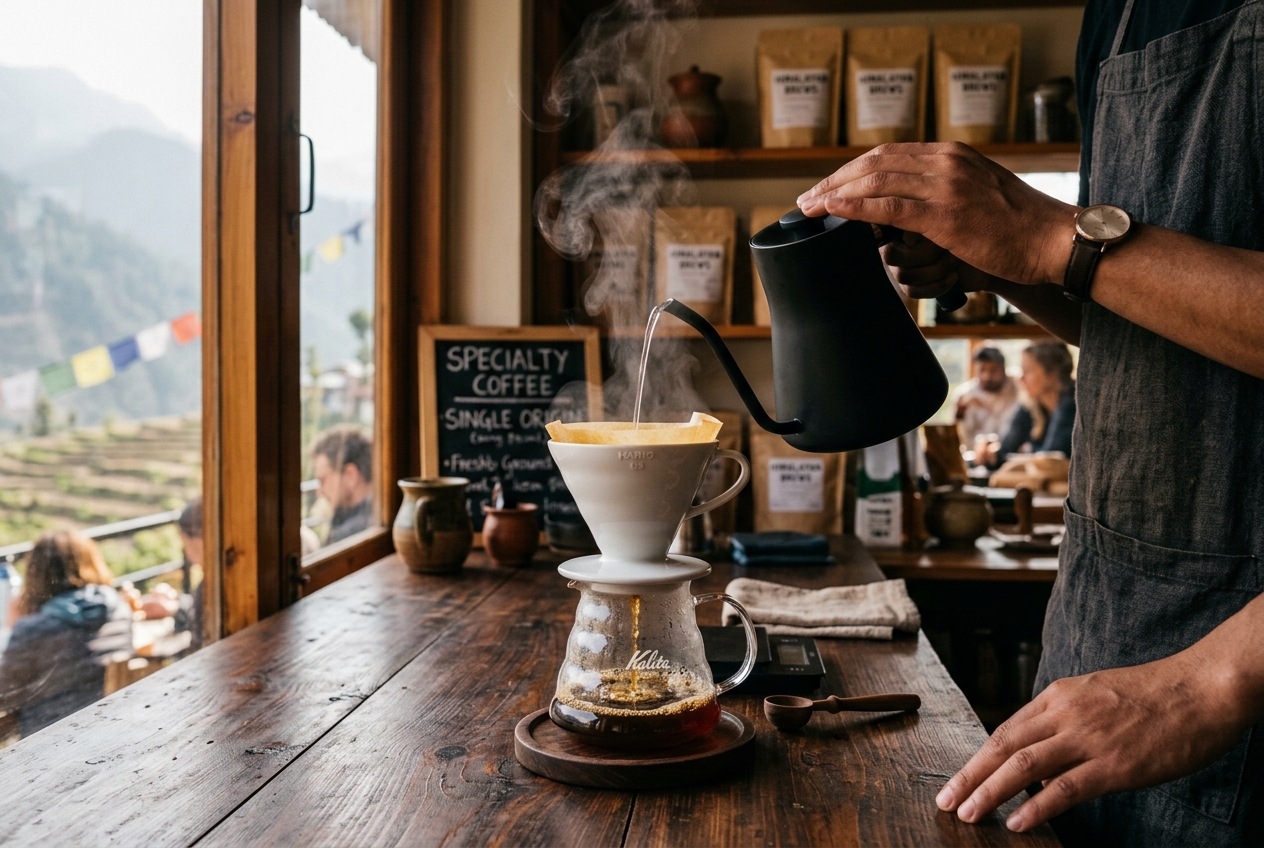
For hand-poured filters (V60 or Origami drippers), we adhere to a 1:16 brew ratio: exactly 15 grams of medium-coarse ground Arabica to 240 grams of 92.5°C water, poured over 2 minutes and 45 seconds in concentric circles.
3. The Bloom and the Unfolding
The moment hot water first contacts freshly ground coffee, a violent yet silent liberation occurs: trapped carbon dioxide from roasting rushes out, causing the coffee bed to swell like rising dough. This is the bloom. Allowing 45 seconds of bloom before continuing the pour ensures that subsequent water extracts the sweet, delicate fruit acids—green apple, wild bergamot, stone fruit—before heavier roasted tannins can emerge.
4. Temperature & the Evolution of Taste
One of the greatest pleasures of specialty coffee is drinking it unhurried. When scalding hot, the human tongue cannot distinguish nuanced aromatics. But as your cup slowly cools on the cedar table from 70°C down to 50°C, the brew transforms. What began as dark chocolate and toasted hazelnut blooms into wild Himalayan honey, dried apricot, and sweet citrus clarity.
Next time you hold a cup at Gabbu’s, don’t rush. Wrap your palms around the warm ceramic, take in the cedar and pine in the air, and let the first sip linger. That is the art of coffee.