Every cup of coffee is the seed of a tropical fruit. Long before it is grounded into fragrant brown powder, it grew inside a ruby-red cherry on a mountain slope surrounded by pepper vines, silver oaks, and cardamom groves. Understanding the journey of that cherry is the difference between simply drinking caffeine and experiencing agricultural artistry.
1. Arabica vs. Robusta: The Fundamental Divide
While there are over 120 known coffee species, the specialty world is almost entirely dedicated to Coffea Arabica. Arabica accounts for roughly 60% of global production, grown at higher elevations (typically above 1,000 meters). Because Arabica matures slowly in cooler mountain climates, the sugars and complex organic acids have time to develop dense, intricate flavor compounds.
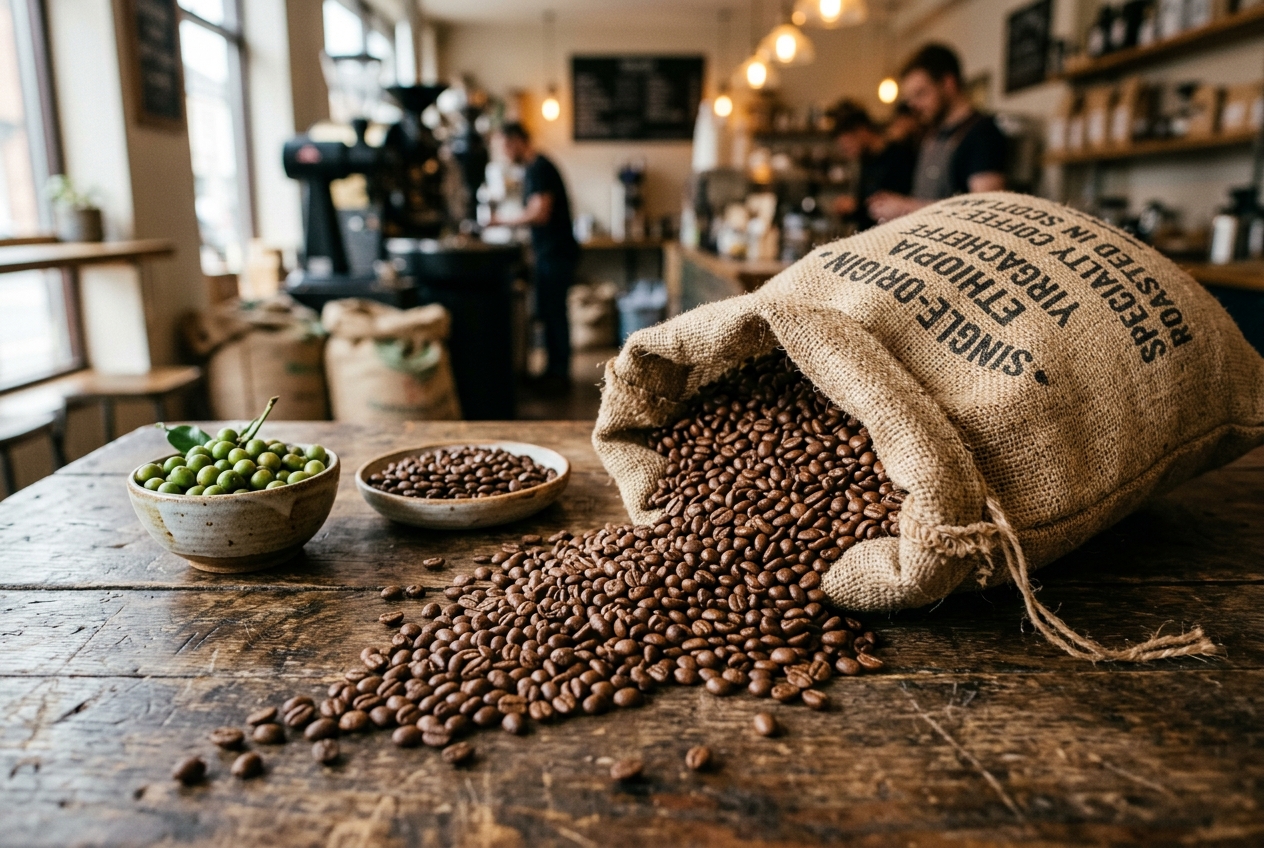
Coffea Canephora (Robusta), by contrast, grows at lower elevations with higher caffeine content and harsher, rubbery notes. At Gabbu’s, 100% of our single-origin pour-overs and 90% of our espresso bar uses specialty-grade Arabica (specifically S795 and SLN9 cultivars), sourced directly from certified organic family estates in Chikmagalur and the Baba Budan Giri hills.
“In the shade of two-tier canopy forests, coffee ripens at the pace of nature. You cannot rush altitude, and you cannot fake terroir.” — Master Roaster at Gabbu’s
2. The Processing Methods: Shaping the Soul of the Bean
Once ripe cherries are selectively hand-picked, the seed must be separated from the fruit pulp. The method chosen fundamentally dictates the cup’s personality:
- Washed (Wet Process): The fruit pulp is mechanically removed and beans are fermented in clean spring water before sun drying. This produces an exceptionally clean, bright cup with vibrant acidity and crisp citrus florals.
- Natural (Dry Process): Whole cherries are spread across raised African drying beds under the sun for up to three weeks. The sweet pulp ferments gently against the bean, infusing heavy strawberry jam, dried date, and boozy wine complexity.
- Honey / Pulped Natural: A hybrid method where the skin is removed but the sticky fruit mucilage (“honey”) remains during drying. The result is balanced caramel sweetness with silky, buttery mouthfeel.
Our flagship house espresso—the Gabbar Blend—is a curated harmony of 70% washed Arabica from Chikmagalur (providing crisp cacao and green pear brightness) and 30% anaerobic natural Arabica from Coorg (adding lush dried fig, dark brown sugar, and hazelnut body).
3. Roasting in the Himalayas
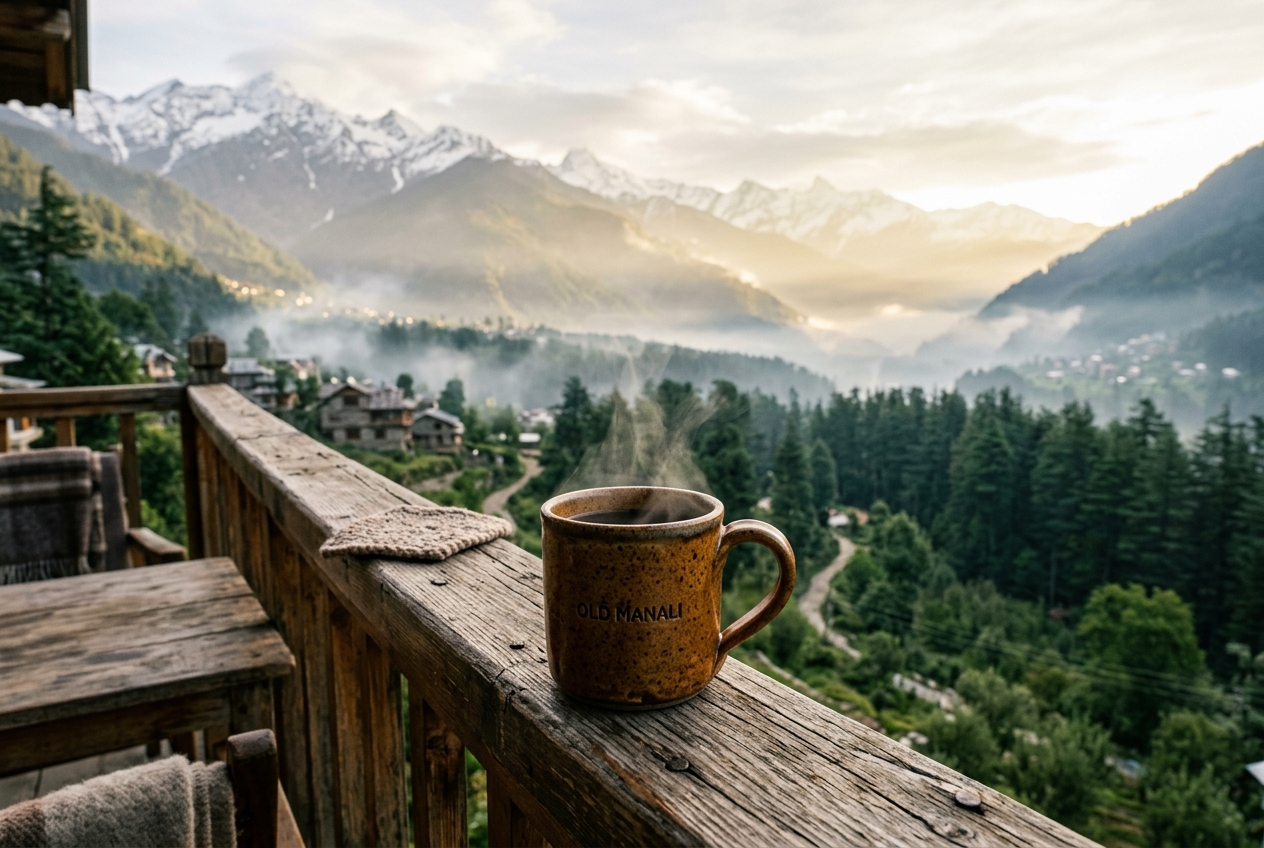
Transporting green coffee beans to Old Manali brings a unique roasting dynamic. At 2,050 meters, the thinner mountain air alters convective heat transfer within our drum roaster. We roast in micro-batches of just 4 kilograms, carefully managing burner temperatures to extend the Maillard phase—the chemical reaction between amino acids and reducing sugars that produces toffee, dark chocolate, and toasted almond aromas.
4. Freshness: The Peak Flavor Window
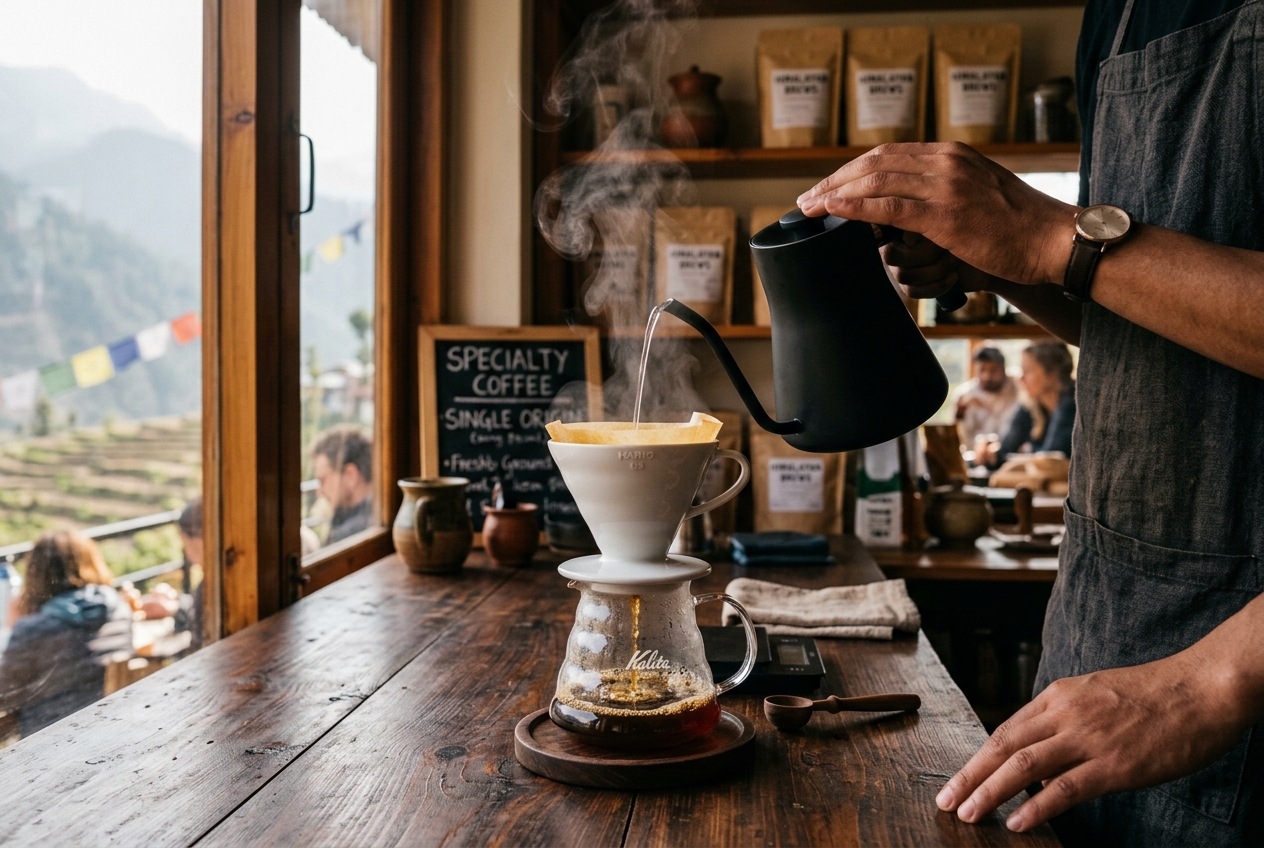
Contrary to popular belief, coffee should never be brewed immediately off the roaster. Freshly roasted coffee contains excessive carbon dioxide that violently bubbles during brewing, leading to uneven extraction and harsh metallic tastes. We rest our roasted beans for 5 to 7 days before serving, when flavors have stabilized into their sweetest, most harmonious balance.
When you ask our baristas about the beans in the hopper, they will tell you the estate name, the elevation, the harvest date, and the family who picked it. Because a good cup of coffee is never anonymous—it is a story that connects the fertile soils of South India with the pine-scented peaks of Himachal.