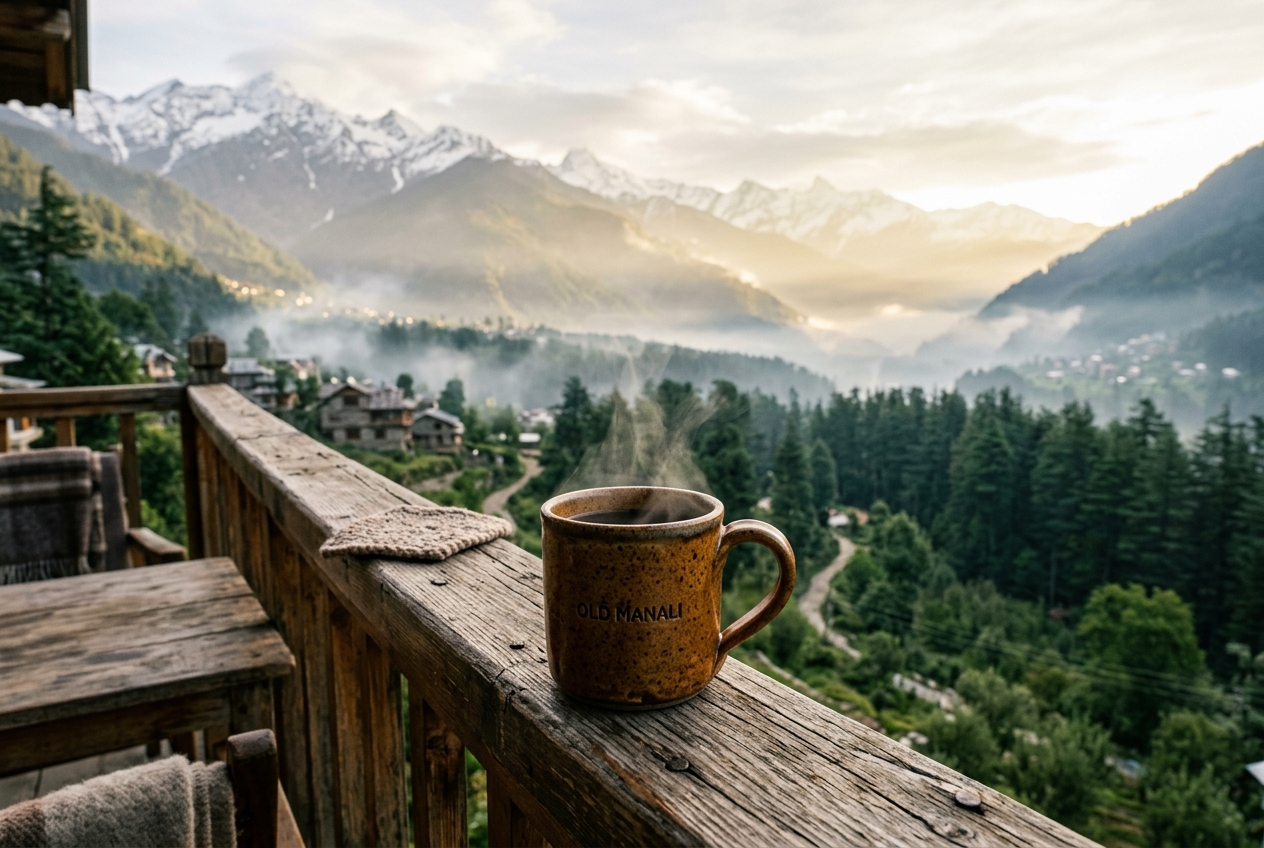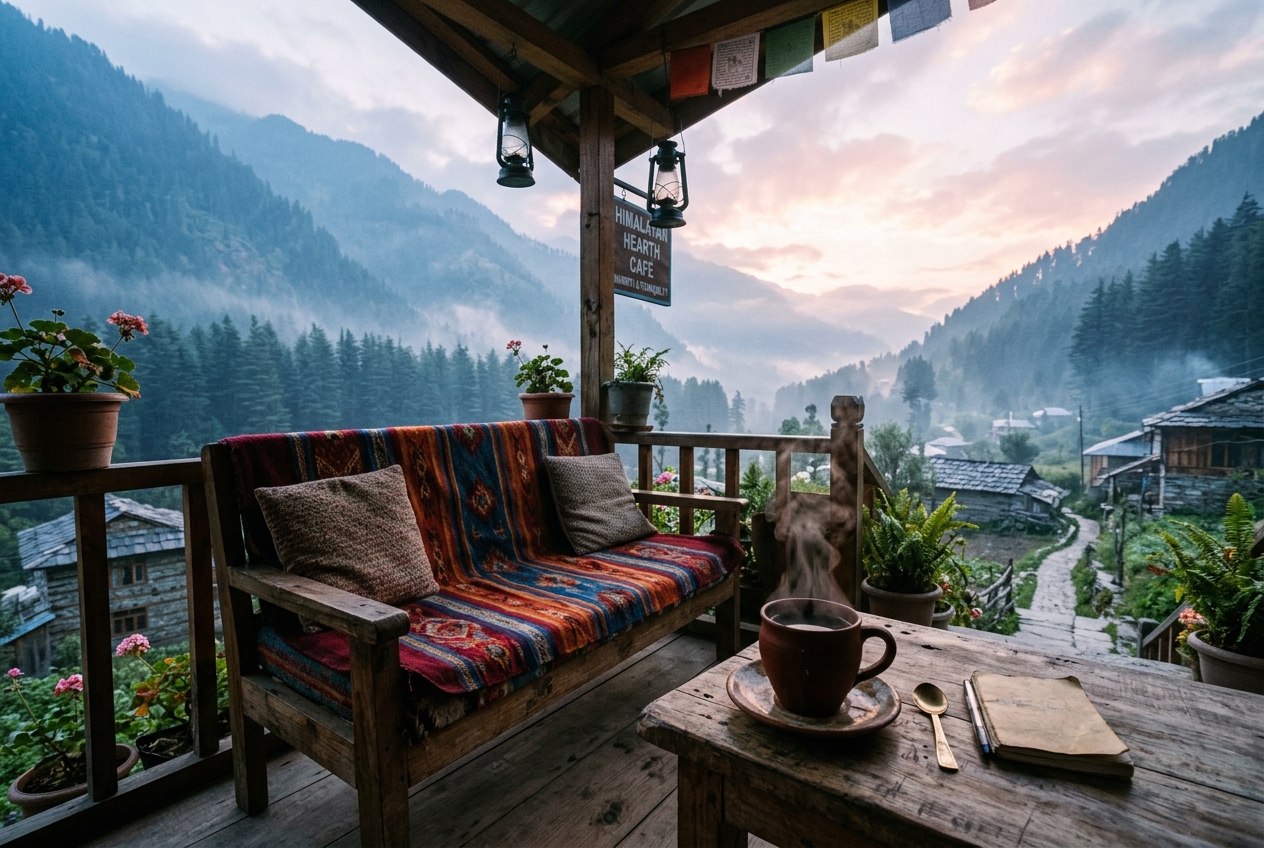
Sociologist Ray Oldenburg coined the term The Third Place to describe the essential public realms that exist beyond home (first place) and work (second place). A true third place provides neutral ground, an unpretentious atmosphere, easy conversation, and regular companionship. But while many coffee shops exist, surprisingly few achieve the elusive aura of feeling genuinely like home.
When we designed Gabbu’s in Old Manali, we asked ourselves an uncompromising question: What allows a tired traveller or a solitary writer to sit down, exhale deeply, and feel safe? Here is what we learned.
1. The Geometry of Light: Eradicating the Glare
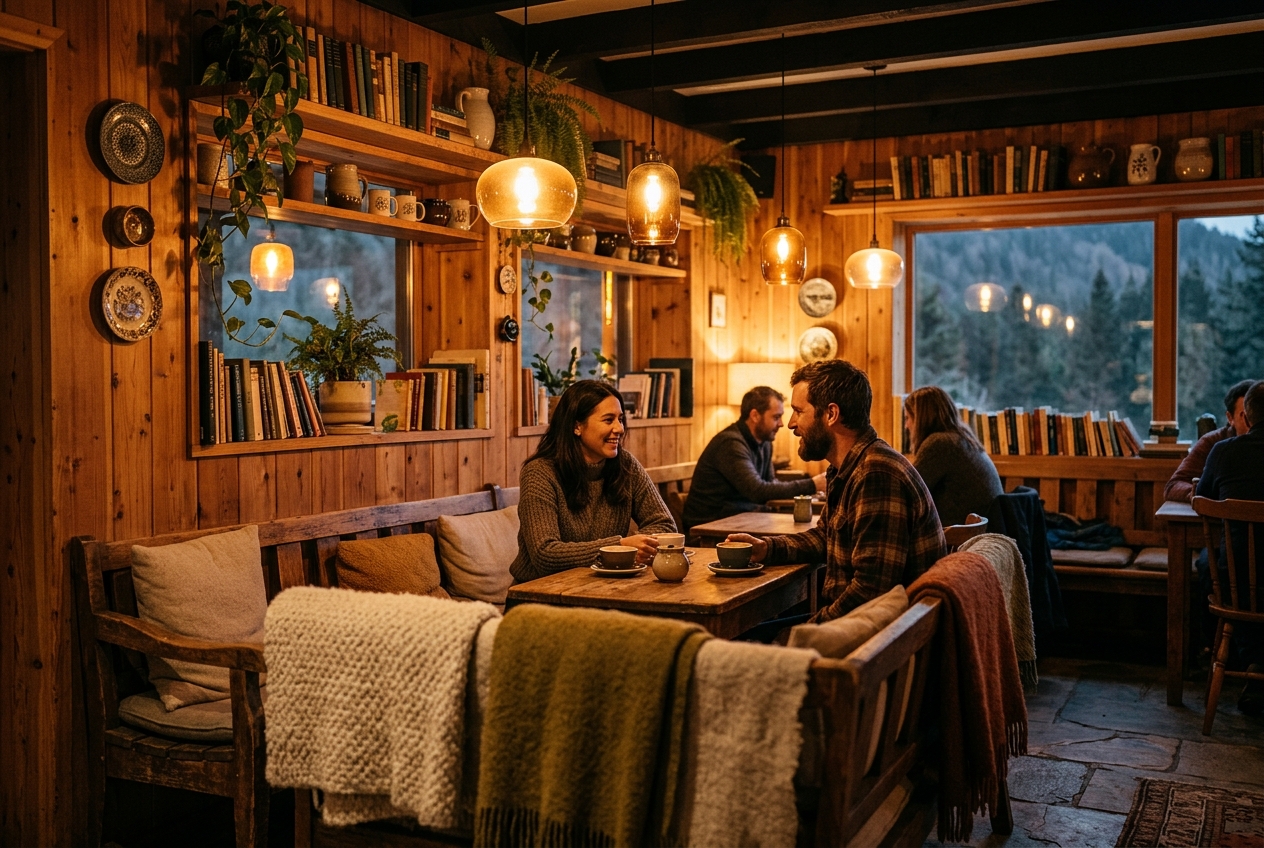
Modern commercial spaces are obsessed with high-lux fluorescent illumination—bright white downlights designed to keep turnover fast and patrons alert. We did the exact opposite. Every light fixture at Gabbu’s is warm amber (2200K to 2400K), casting pools of gentle luminescence on cedar tabletops while letting the periphery rest in soft, atmospheric shadow.
Low, warm lighting mimics fireside gathering—a primal human cue that signals relaxation and psychological ease. You cannot feel guarded when the room itself holds you in an amber embrace.
“A cafe is not merely a venue that dispenses caffeine; it is a room where your solitude is accompanied by the quiet hum of other human lives.” — Guestbook Entry, Gabbu’s Cafe
2. The Soundscape: Analog Imperfection
We don’t pump algorithmic pop playlists through ceiling speakers. Instead, our music comes from an analog turntable spinning dusty vinyl: acoustic guitar, 70s folk, bossa nova, and instrumental jazz. The faint crackle between tracks is intentional. It reminds the room of human hands handling physical objects with care.
Nobody wants to sit in the exact middle of an empty room. We arranged our cedar benches, corner nooks, and balcony edges so every seat has a “defensible back”—a bookshelf, a cedar wall, or an alcove—giving you personal privacy while looking out onto the world.
3. The Dignity of Recognition
Beyond wood and light, a cafe becomes home through human continuity. When our barista remembers that you prefer an oat flat white with an extra shot, or that you like the corner table by the window to sketch, the invisible transaction of commerce transforms into genuine hospitality.
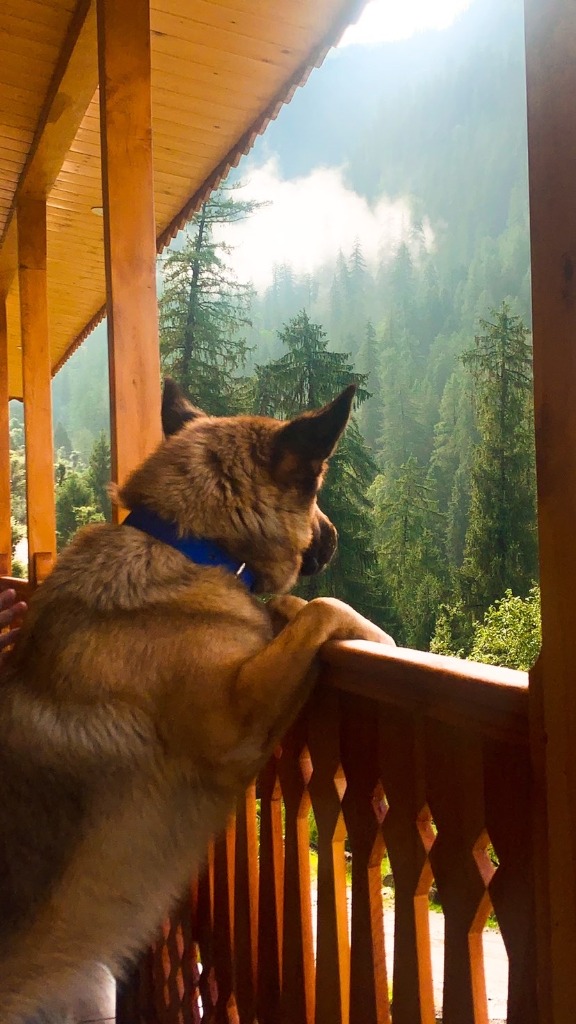
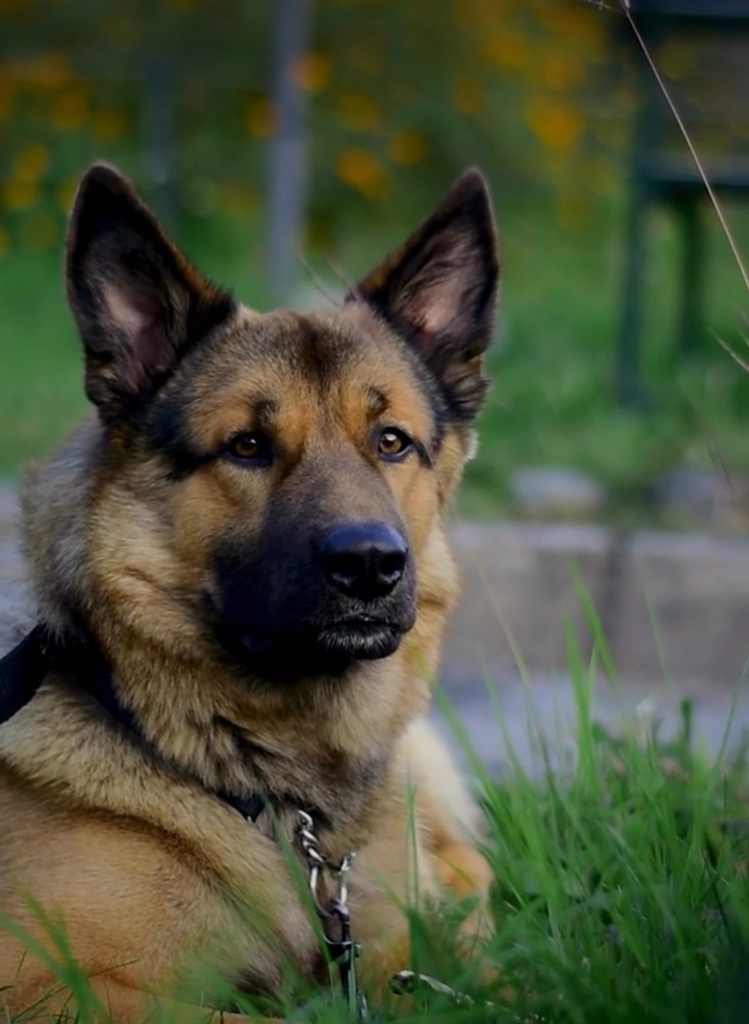
And of course, there was always Gabbu. A German Shepherd who never barked, never demanded attention, but would gently pad across the cedar floorboards and rest his heavy chin near your boot as if to say: Take your time. You’re safe here.
That is what we build every single morning when we unlock the front door at 9:00 AM. Not just coffee, but sanctuary.